Services · Stressing
Post-tensioning & stressing services.
From the first duct to the last grout vent. TYROS crews stress the tendons we supply with calibrated multi-strand and mono-strand jacks and hand over a record for every one.
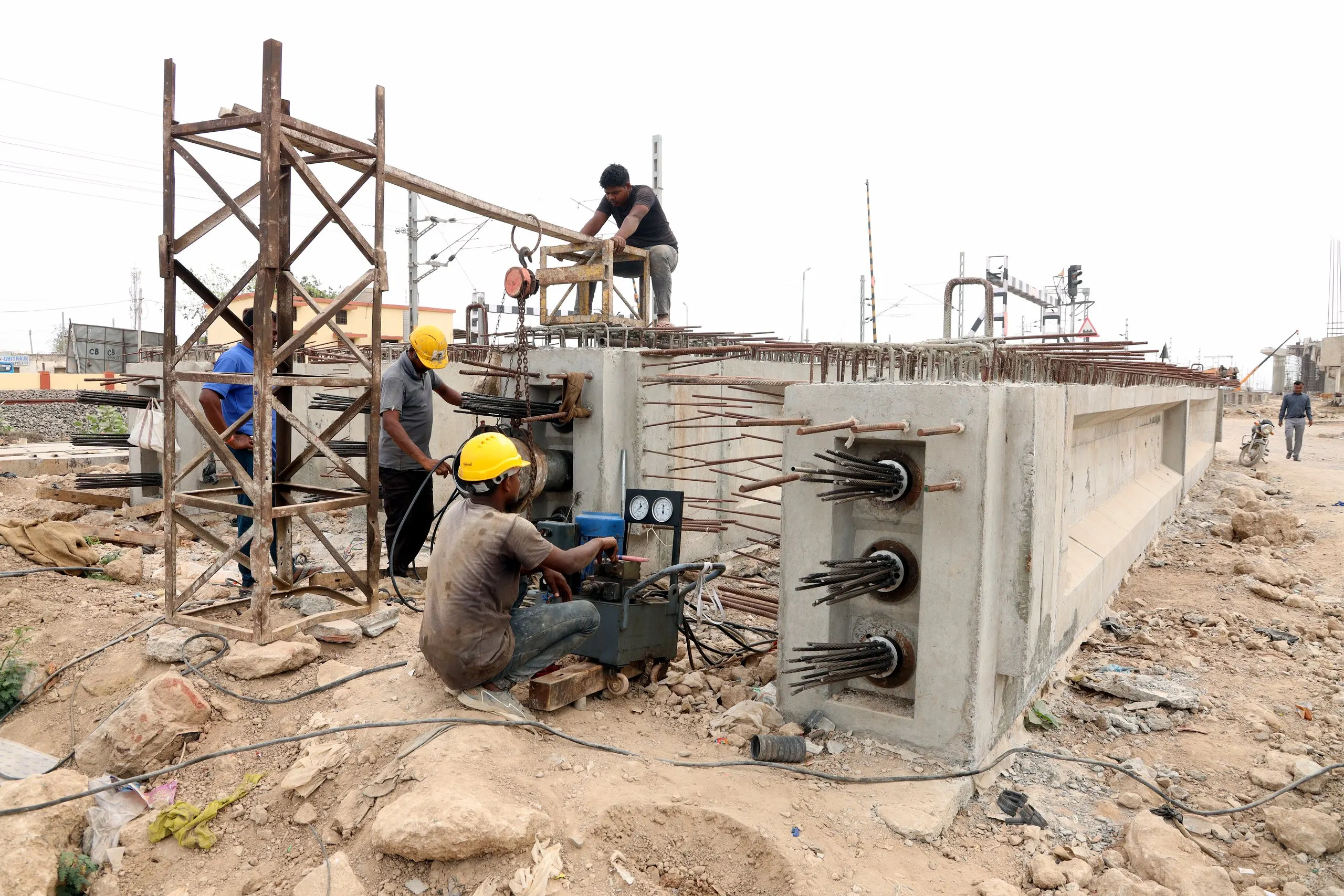
Site · Okha railway bridge, Gujarat
How a tendon gets stressed.
Post-tensioning only works if every step is done in order and written down. This is the sequence our crews follow on every job.
 01Step 1 of 5
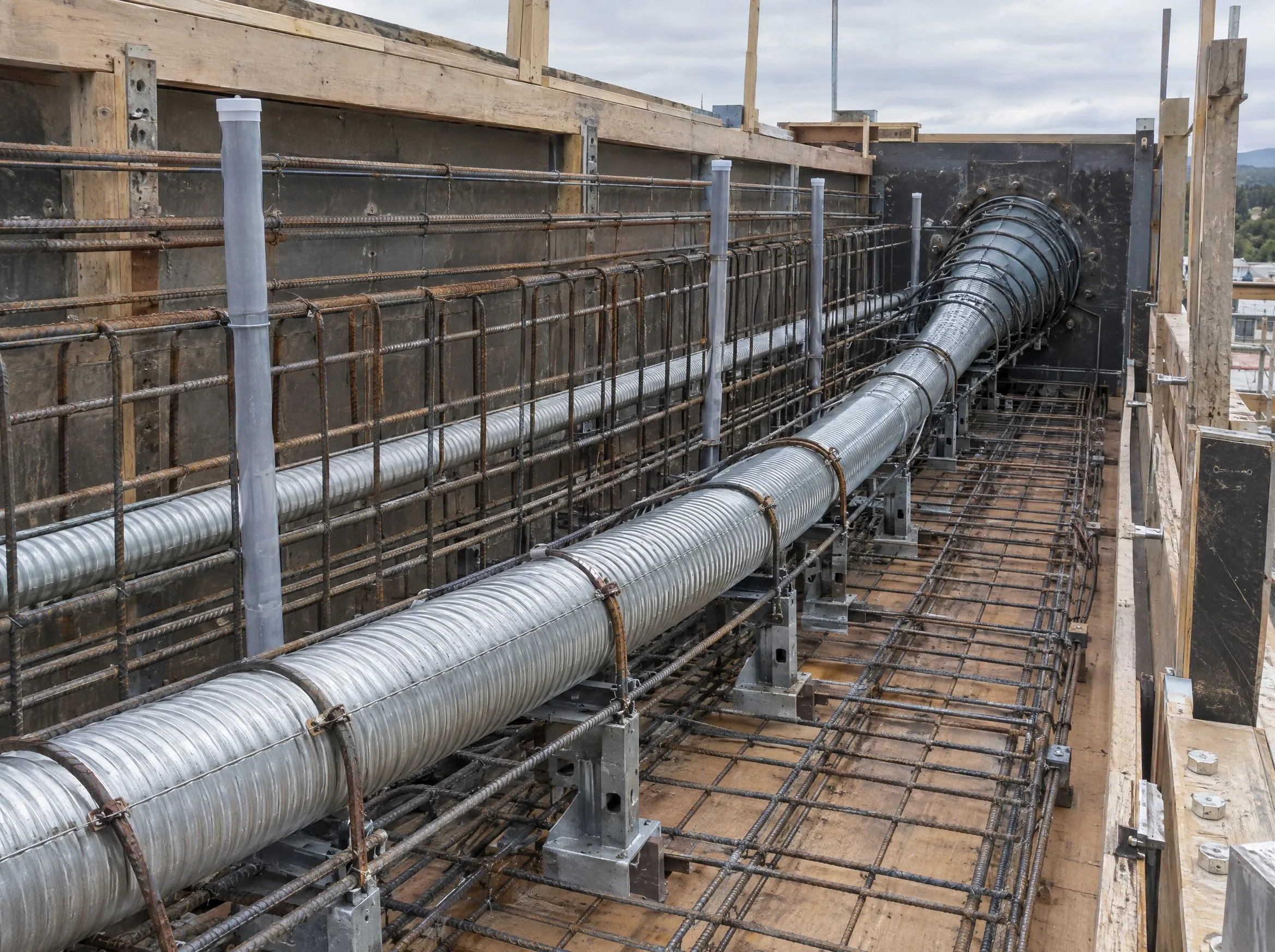
Duct & anchorage installation
Ducts are fixed to the tendon profile on chairs, anchorage cones are set at the bulkhead with their spiral bursting reinforcement, and grout inlets and vents are placed before the pour.
- Profile checked to shop drawings
- Spiral (F, G, H, J, N) fixed per model
- Intermediate vents beyond 35 m
- Ducts sealed against concrete ingress
Site · Okha railway bridge, Gujarat
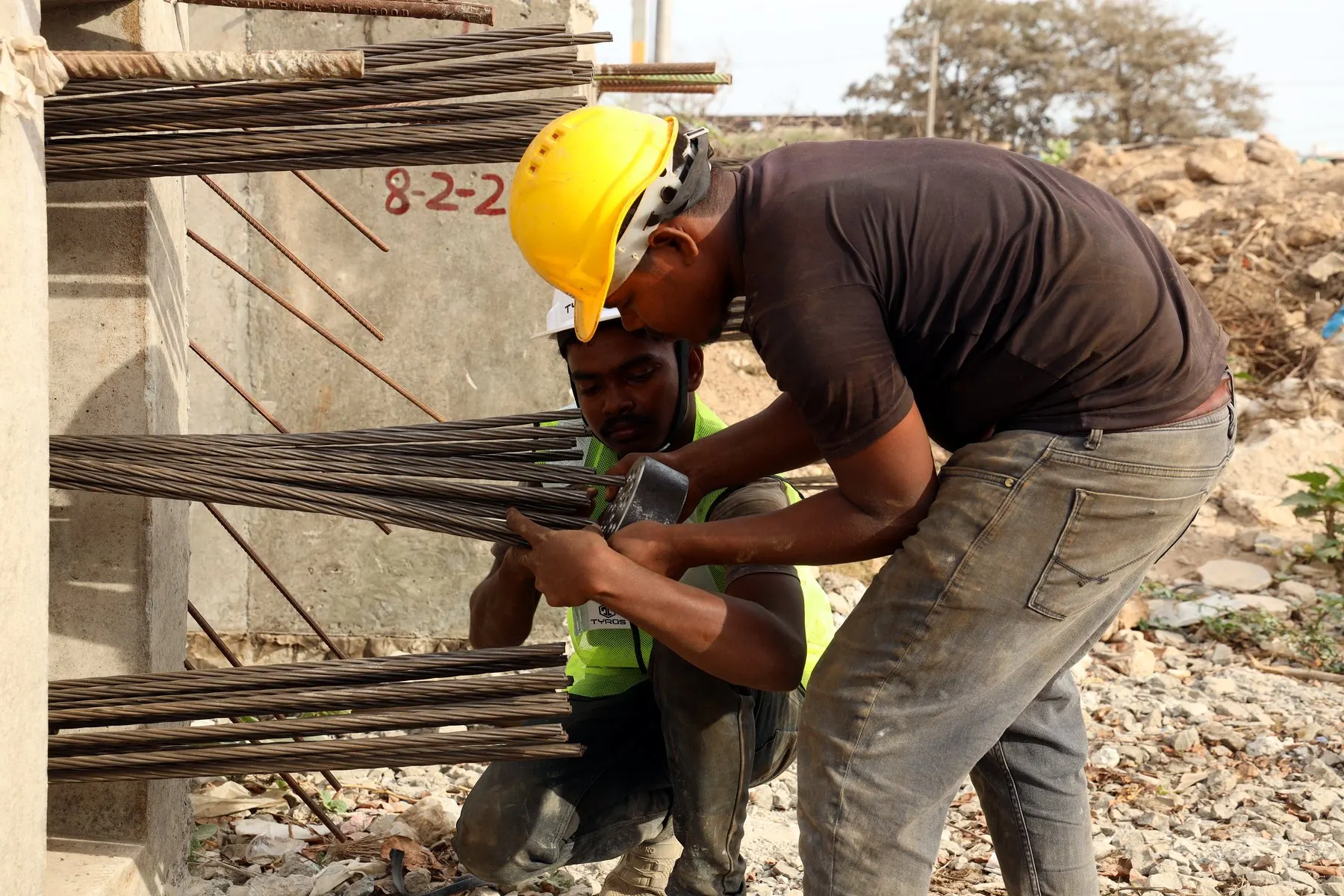
02Step 2 of 5Strand threading
High-tensile strands to IS 14268 are pushed or pulled through the ducts once the concrete has reached its transfer strength, then the anchor head and wedges are fitted.
- 12.7 mm and 15.2 mm strand
- Strand pusher or winch
- Head and wedges seated by hand
- Slack removed at 10% of jacking load
Site · Okha railway bridge, Gujarat
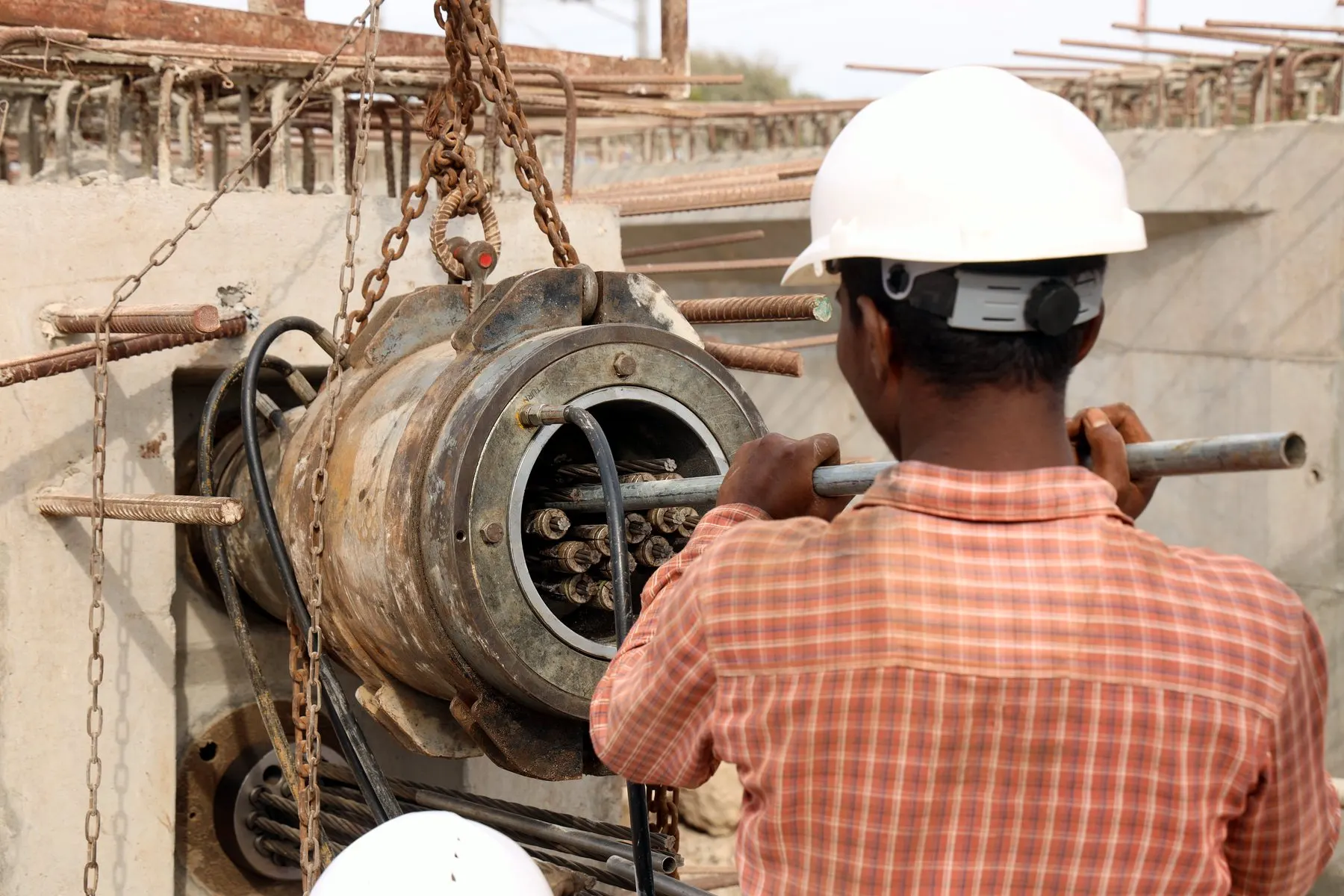
03Step 3 of 5Stressing to 80% UTS
Calibrated multi-strand jacks pull all strands together to the specified force, normally 80% of the tendon's ultimate tensile strength, in controlled increments.
- Jack and gauge calibrated as a pair
- Load applied in equal increments
- Pressure and elongation logged per step
- Both ends stressed where specified
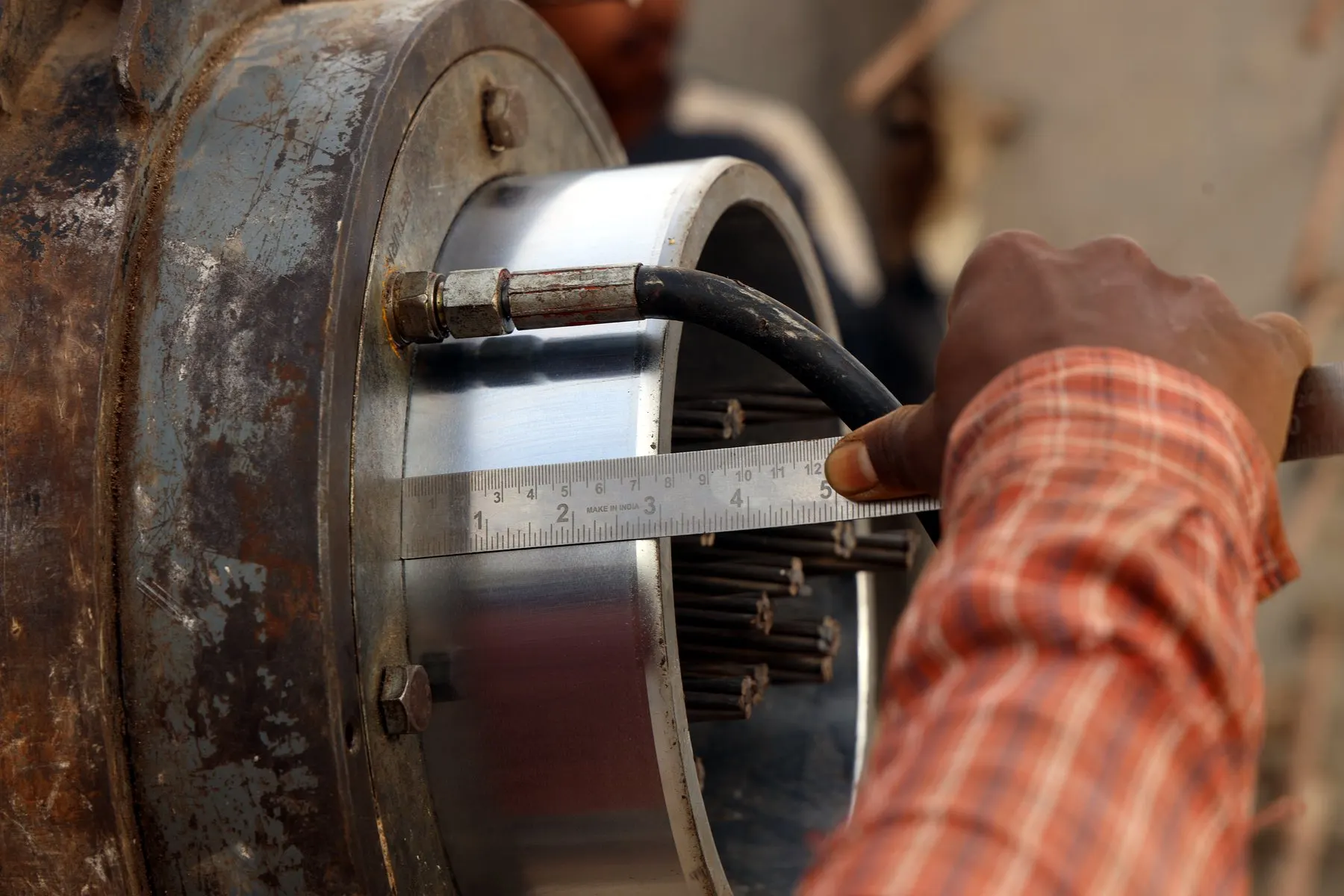
Site · Okha railway bridge, Gujarat
04Step 4 of 5Elongation check & lock-off
Measured elongation is compared with the design value. Within tolerance, the wedges are seated, the jack released and the strands cut and sealed.
- Elongation within ±5% of design
- Wedge draw-in recorded
- Strands cut 25 mm beyond wedges
- Pockets sealed before grouting
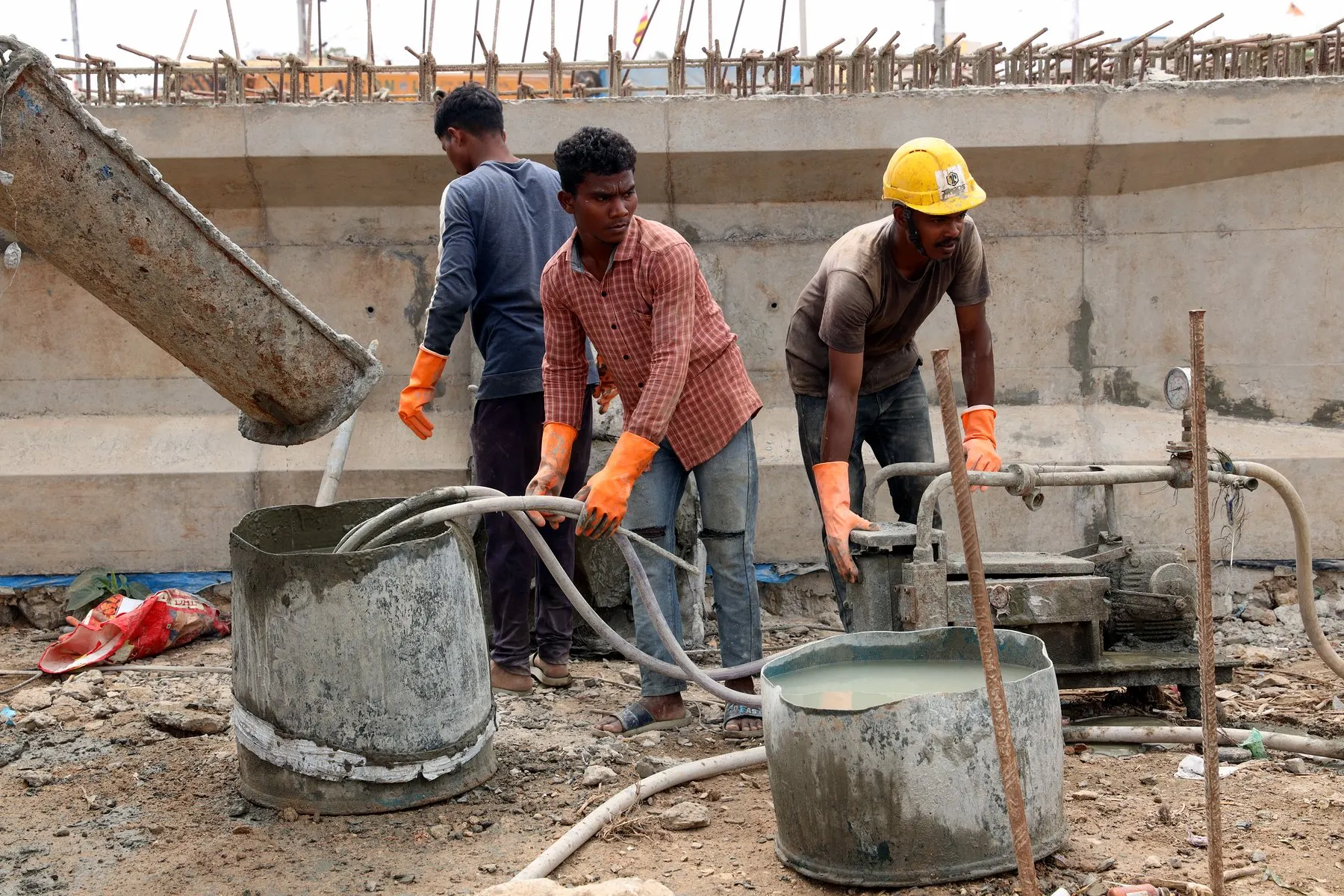
Site · Okha railway bridge, Gujarat
05Step 5 of 5Grouting
Ducts are filled with cement grout that bonds the strand to the concrete and gives it permanent corrosion protection. Vacuum grouting is used where IRC specifications call for it.
- Grout to IRC / MORTH Section 1800
- Fluidity and bleed tested
- Vents closed in sequence
- Records issued per tendon
Equipment on the truck.
Multi-strand jacks
Centre-hole jacks for 4 to 19 strand tendons, matched to each AT head.
Mono-strand jacks
Lightweight jacks for slab tendons and single-strand stressing.
Hydraulic power packs
Electric pumps with calibrated gauges and load cells for verification.
Strand pushers & winches
Mechanised threading for long ducts and multi-strand tendons.
Grout mixers & pumps
Colloidal mixers and pumps with vacuum capability for critical tendons.
Records & QA
Per-tendon stressing and grouting records for the engineer's sign-off.
Working to code.
Tendons are stressed to the engineer's drawings. Jacking force is typically 80% of the tendon's ultimate tensile strength (see the specification table for each AT model).
Pier cap stressing.
The cantilever caps on a viaduct are the first post-tensioned elements on the job. TYROS stresses them from the end faces, in stages, as the girders land.
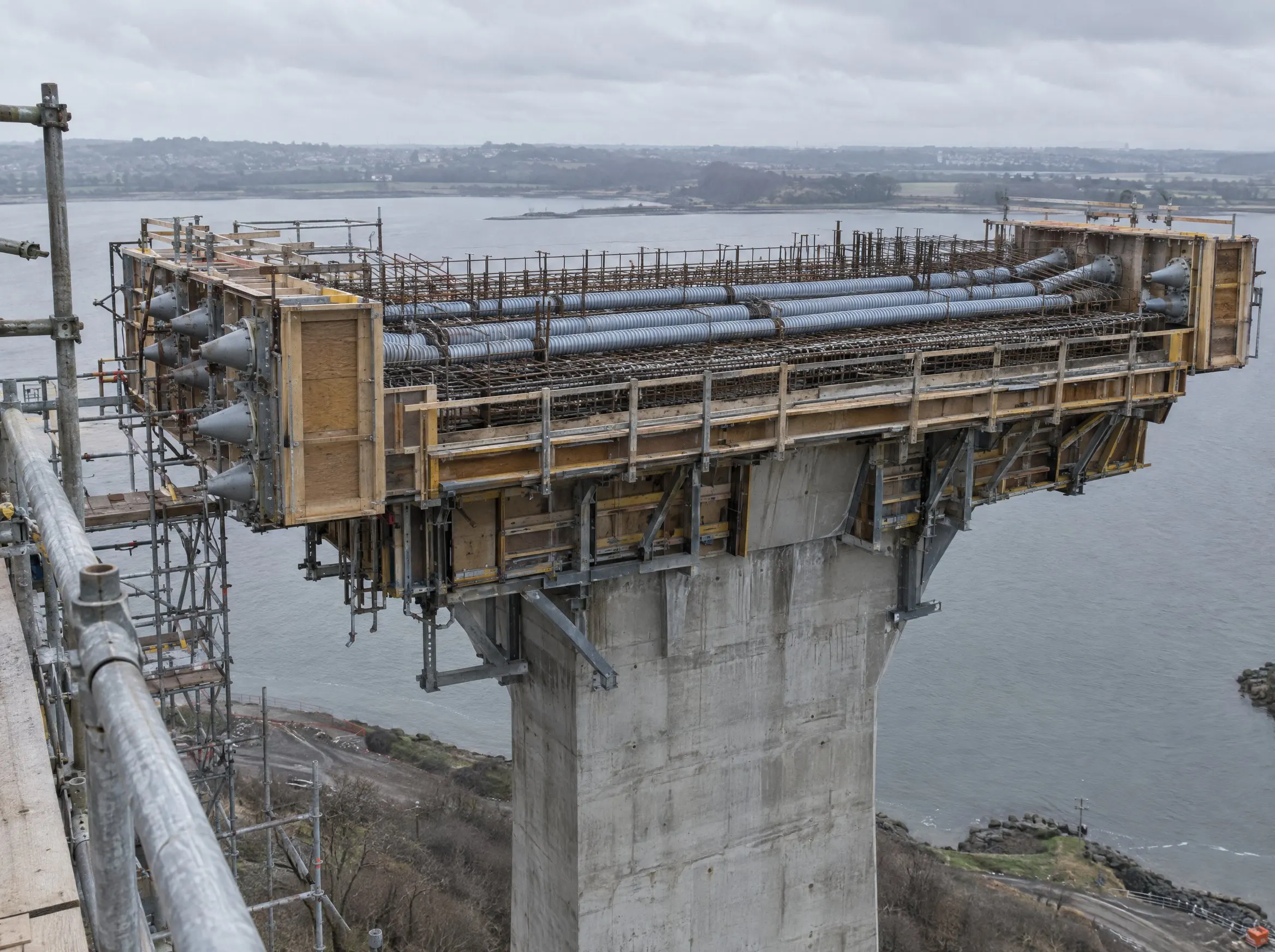
Ducts and cones in the cage
HDPE ducts on the designed profile, AT cones and spirals at the bulkheads, vents at the high points.
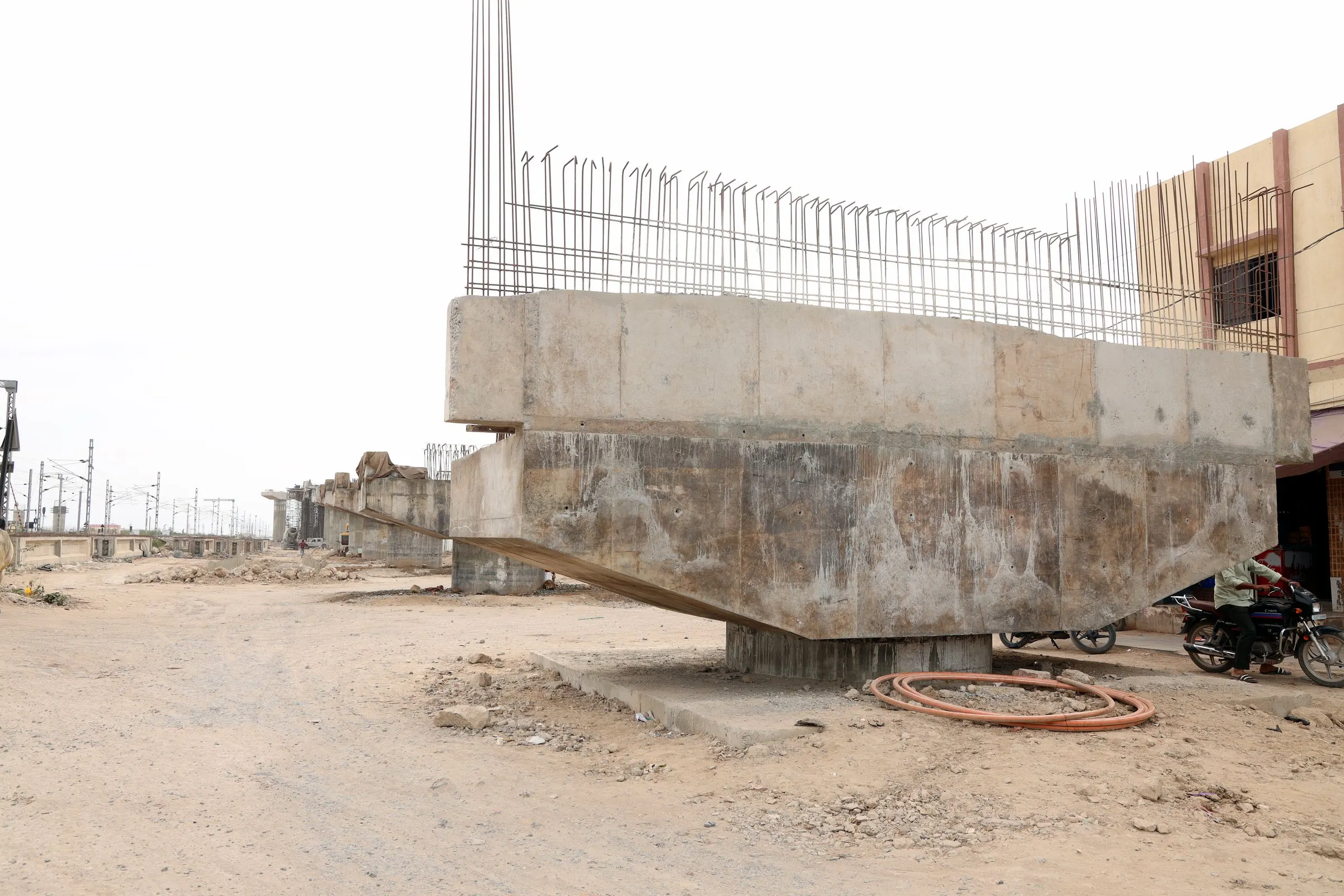
Site · Okha railway bridge, Gujarat
Stressed from the end face
Multi-strand jack on the anchorage, one end live and the other dead, in increments matched to erection.
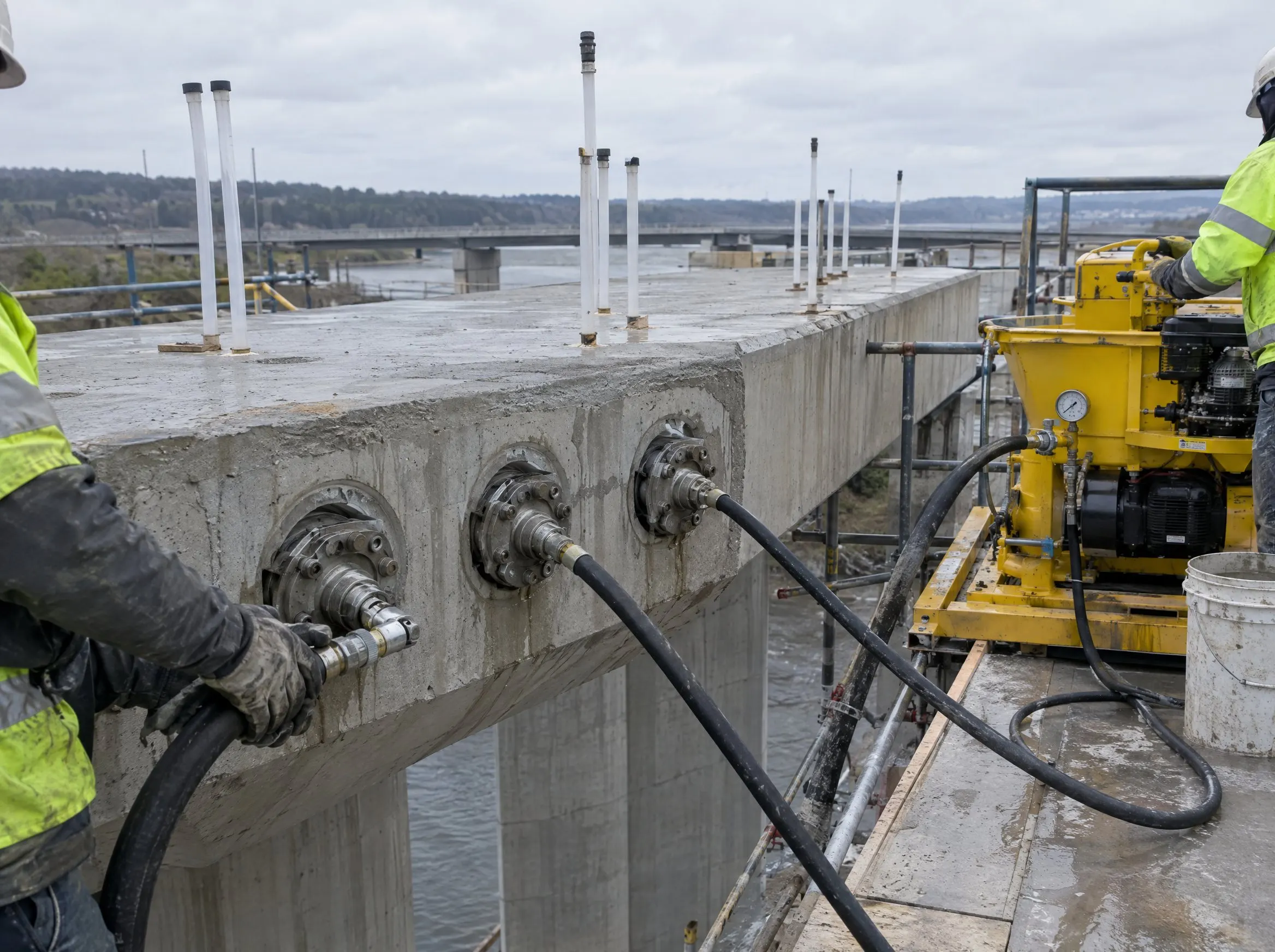
Grouted and recorded
Pressure grouting after lock-off, vents closed in sequence, one record per tendon for the engineer.
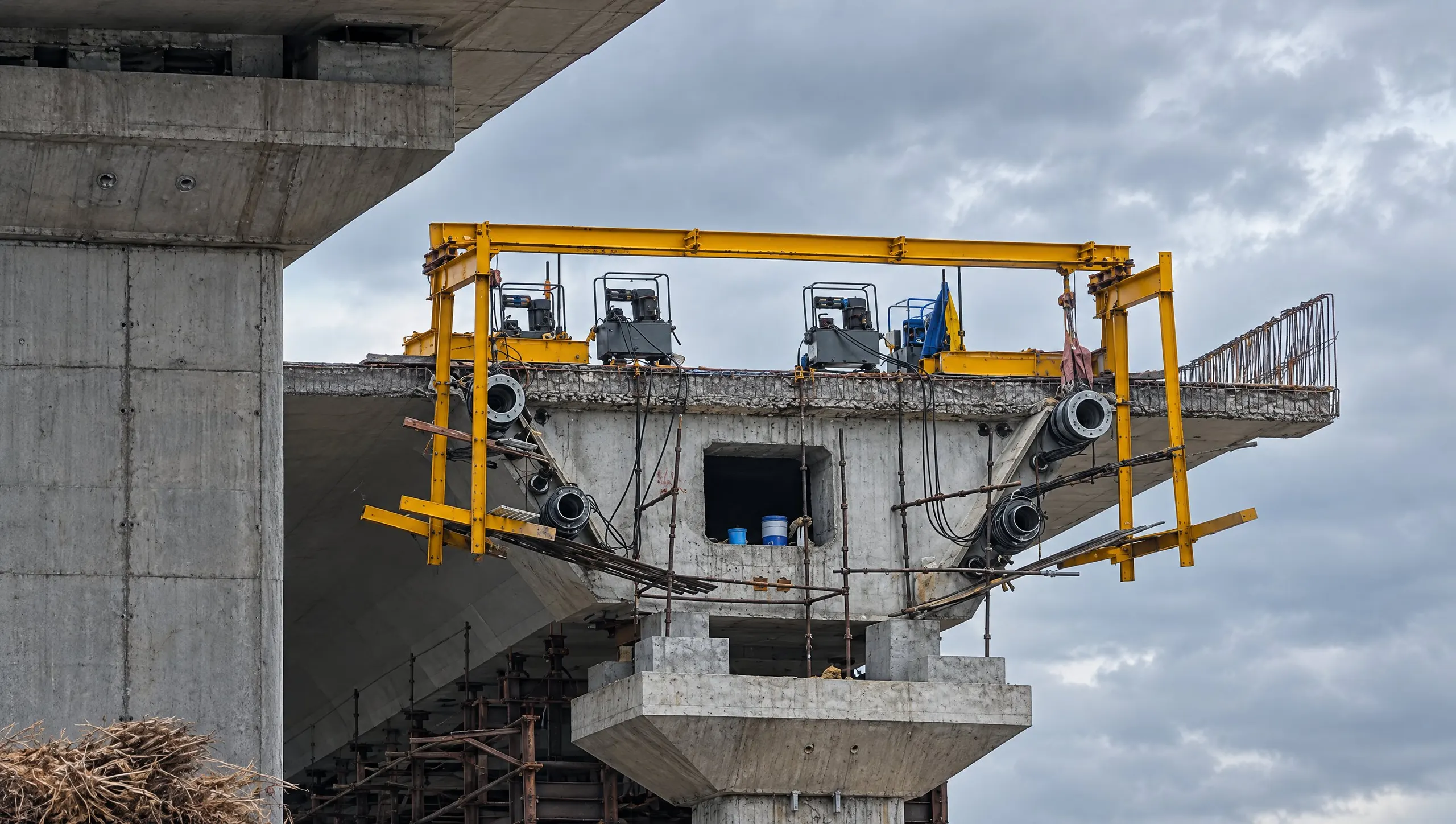
Girder stressing on a TYROS site: anchorages on the girder end face, jacks on the gantry above, strands still to be cut.
Where we stress.
Any structure that carries post-tensioned or pre-tensioned steel.
Box girders & segmental decks
Internal tendons in balanced-cantilever and span-by-span construction.
Precast I and U girders
Post-tensioned or pre-tensioned girders for viaducts and metro.
Flat slabs & transfer girders
Bonded and unbonded slab tendons; heavy transfer elements.
Tanks & silos
Circumferential tendons on LNG, water and cement storage structures.
Ground anchors
Strand anchors for retaining walls, slopes and uplift.
Repair & strengthening
External tendons to add capacity to existing structures.
Stressing questions.
What engineers and contractors ask before a TYROS crew mobilises.
Do you manufacture post tensioning anchorages in India?
Yes. TYROS AT type anchorages (anchor heads, anchor cones, wedges and spiral reinforcement) are made by Adroit Group in India and supplied with HDPE sheathing ducts.
Can we buy anchorages only, without your stressing crew?
Yes. TYROS supplies the AT system on its own, with technical support on anchorage specification, anti-burst reinforcement and stressing methodology for your contractor.
What force do you stress tendons to?
To the force on the engineer's drawings, normally 80% of the tendon's ultimate tensile strength. Load goes on in equal increments with calibrated multi-strand jacks, and pressure and elongation are logged at every step.
How is elongation checked?
Measured elongation at each increment is compared with the design value. It must fall within ±5%; wedge draw-in is recorded at lock-off. A tendon outside tolerance is not locked off until the cause is found and the engineer agrees.
Which strand sizes and anchorages do you stress?
TYROS AT type anchorages for 12.7 mm (AT 13) and 15.2 mm (AT 15) strand, from 4 to 19 strands per tendon and up to 400 tons UTS. Strand is to IS 14268.
Do you stress pier caps as well as girders?
Yes. Girders are stressed on the casting bed or once erected; cantilever pier caps are stressed from their end faces, in stages matched to girder erection.
Do you grout the tendons?
Yes. Ducts are pressure-grouted after lock-off to IRC and MORTH Section 1800, with fluidity and bleed tests, vents closed in sequence and vacuum grouting where the specification calls for it.
What records do you hand over?
A stressing record and a grouting record for every tendon, for the engineer's sign-off, with jack and gauge calibration referenced.
Send us the tendon schedule. We'll send back the anchorage.
Anchorage specifications, anti-burst reinforcement details and the stressing methodology — for every contractor, on every job.
Need the tendons stressed too? See our post-tensioning stressing services.